
老司机
650位杭州人参加了一场“体质大考”,结果出人意料_我的网站

A | 常干力气活,身体差不了? 乌建荣在做体测
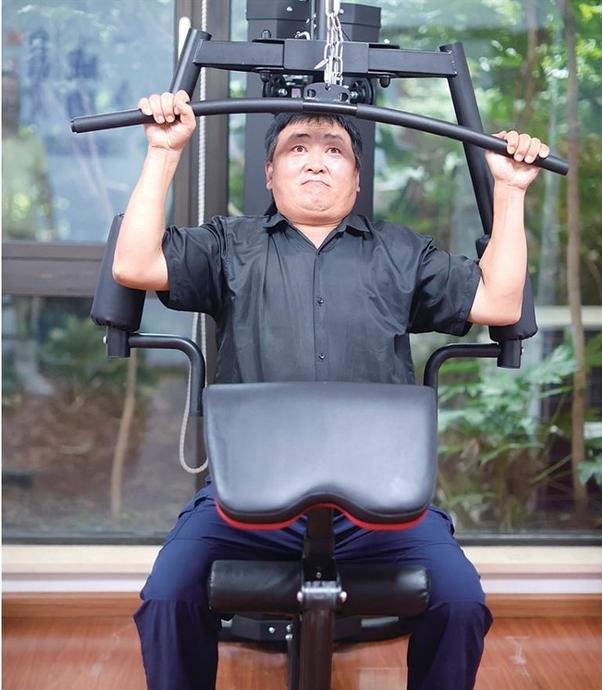 牛涛在做体测 记者 江玥 摄近日,滨江区浦沿街道新生社区的监测点,身高体重仪、台阶测试器、握力计一字排开,29个社区的650位居民排队“考试”。 Hrishikesh Mukherjee started his career in the film world as an editor. He was editor and assistant director to another Bengali great, Bimal Roy, and edited Roy’s films like Do Bigha Zamin (1953), Devdas (1955) and Madhumati (1958). He’s also edited films like Gunga Jumna (1961) and Coolie (1983), among others. Malayalam language films like Chemmeen (1965) and Nellu (1974) have also been edited by him. He branched out as an independent director with the episodic film Musafir (1957). Commercial success followed with films like Anari (1959) and Asli Naqli (1961). But it was with Anupama (1964) which depicted the filial bond between a father and a daughter, that he began to be counted as a director who could successfully marry art and commercial cinema. He went on to make seminal films like Aashirwad (1968), Satyakam (1969), Guddi (1971), Anand (1971), Bawarchi (1972), Abhimaan (1973), Namak Haraam (1973), Mili (1975), Chupke Chupke (1975), Gol Maal (1979), Khubsoorat (1980) and many more. His films were set in middle-class India and were populated with characters who battled emotional crises. The masses were able to relate to his heart-touching stories and characters and that’s why his films are fondly watched even today. Here’s taking a look at some of his best films as a director over the years.
In This Article
Anupama (1966)Aashirwad (1968)Satyakam (1969)Anand (1971)Guddi (1971)Bawarchi (1972)Namak Haram (1973)Abhimaan (1973)Mili (1975)Chupke Chupke (1975) Khubsoorat (1980)Anupama (1966)
Cast: Dharmendra, Sharmila Tagore, Tarun Bose
Mohan Sharma (Tarun Bose), a successful businessman, is happily married to Aruna (Surekha Pandit), who unfortunately dies while giving birth to their daughter. Distraught, Mohan Sharma becomes an alcoholic and can’t bear to see his daughter's face. Uma (Sharmila Tagore) is brought up by servants and while she’s beautiful and intelligent, she’s highly introverted and in her heart blames herself for her mother’s death. She begins to love Ashok (Dharmendra) but agrees to marry another man when she learns her father doesn’t like him. Love, however, has changed her and noticing the change, her father finally comes to his senses and lets her lead her own life.
Aashirwad (1968)
Cast: Ashok Kumar, Sanjeev Kumar, Sumita Sanyal
Jogi Thakur (Ashok Kumar) leaves home when he finds out that his wife had ordered the houses of the poor be razed. Later, he kills a man who was trying to rape a girl. He gives himself up and is given a life sentence. Some years later, he’s shown to be friends with the prison doctor (Sanjeev Kumar. He’s happy to learn that his daughter is to be married to the doctor but hides his identity when he comes to know she hates criminals. He’s released on the day of her wedding, and watches it from afar, giving her his final blessings before succumbing to a heart attack. Ashok Kumar was praised for his sublime acting and won both the National Award and the Filmfare Award for his performance.
Satyakam (1969)
Cast: Dharmendra, Sharmila Tagore
The film revolves around Satyapriya (Dharmendra) and his experiments with absolute truth. He fails to save Sharmila Tagore’s character from being raped by his employer and is a fit of guilt, marries her. And this guilt never leaves him but goads him to pursue truth at any cost -- be it the loss of employment, property or even life. Tears fly when Sharmila accepts her dead husband’s harsh way of life and tells her son that he can’t light his father’s pyre as he biologically wasn’t sired by him. Yes, truth has prevailed -- but can the child handle the truth?
Anand (1971)
Cast: Rajesh Khanna, Amitabh Bachchan
Anand was a paean about friendship, about facing life stoically and laughing even at death’s threshold. The film was dedicated to Raj Kapoor and Hrishida allegedly wrote the film as a testimony to his friendship with Kapoor. Rajesh Khanna breezed through the title role of an extroverted cancer patient who faces the terminal stage of his disease with laughter on his face and sees death as another adventure. He lives several lifetimes in his last few months and teaches others, especially his caring doctor Bhaskar Bannerjee aka Babumoshoi, to loosen up and enjoy life more. Bachchan's reserved, restrained performance was the perfect foil to Khanna’s exuberance. The film doesn’t fail to put tear faucets into overdrive with every rerun.
Guddi (1971)
Cast: Dharmendra, Jaya Bhaduri
Though she has acted in Satyajit Ray’s Mahanagar (1963) in a supporting role, Guddi is Jaya Bhaduri’s debut film as far as Hindi cinema is concerned. She played a schoolgirl obsessed with the actor, Dharmendra, in the film. She’s so much into him that she even refuses to marry the man intended for her, saying she can’t love another as she’s totally in love with the actor. Her uncle (Utpal Dutt) meets with Dharmendra and asks her to help out in the situation. The actor has to play out a different role for the girl to realise the difference between the reel and real life. It was a power-packed performance by the youngsters and she came to rule the hearts and minds of the audience as the good girl.
Bawarchi (1972)
Cast: Rajesh Khanna, Jaya Badhuri, Asrani, A.K. Hangal, Usha Kiran and Durga Khote
The film revolves around the dynamics of the dysfunctional Sharma family, comprising Daduji (Harindranath Chattopadhyay), his sons Ramnath Sharma (AK Hangal) and Kashi (Kali Bannerjee), their respective wives Seeta Sharma (Durga Khote) and Shobha Sharma (Usha Kiran), another son Vishwanath Sharma (Asrani), and granddaughters Meeta (Manisha) and Krishna (Jaya Bhaduri). Servants tend to run away from their family every six months because the members are always quarrelling. Raghu (Rajesh Khanna) their latest cook soon starts noticing their quirks and starts placating them one by one, winning their trust in the process. There’s harmony in the house and the brothers start interacting with each other. Raghu turns out to be a Good Samaritan in disguise whose mission in life is to bring peace and happiness to families who are in dire need of it.
Namak Haram (1973)
Cast: Rajesh Khanna, Rekha, Amitabh Bachchan
This film was the beginning of the end of Rajesh Khanna’s reign. He played a man who infiltrates the trade union in order to avenge the humiliation faced by his industrialist pal and then starts respecting the workers’ rights and their fight against the capitalist culture. Well, the best friend’s role was played by Amitabh Bachchan. According to movie lore, Khanna was offered this role first but he declined it as he saw more merit in the role of a suffering martyr. The audience thought otherwise and was more taken in by Bachchan’s brooding persona. Bachchan had another hit the same year, the massive Zanjeer, in which he played the angry young cop to perfection and effectively took over the superstar’s mantle.
Abhimaan (1973)
Cast: Amitabh Bachchan, Jaya Bachchan, Asrani, Bindu, A.K. Hangal
Subir (Amitabh Bachchan) a renowned singer is a darling of the masses and much in demand. Once, while visiting his aunt in a remote village, he listens to Uma (Jaya Bachchan) singing and falls in love with her. They get married and initially, their days pass in blissful serenity. Trouble starts when Subir asks her to take up singing professionally. She reluctantly agrees and soon her popularity soars. She’s more in demand than him and he can’t digest this fact. Differences crop up between them. He leaves her and she suffers a miscarriage. She becomes hugely depressed because of it. The only way out is through music. Amitabh and Jaya complete each other in the film and perhaps have given the finest performance as a pair in the film.
Mili (1975)
Cast: Amitabh Bachchan, Jaya Bachchan and Ashok Kumar
Mili (Jaya Bachchan) has pernicious anaemia, a disease which was considered incurable back then. She’s the apple of everyone’s eye in her building, especially of children, with whom she plays boisterously despite the age difference. A new tenant Shekhar (Amitabh Bachchan) comes to live in their building and their paths cross. Shekhar is a man running from his past and wants to drown his sorrow in alcohol. Once, in a fit of depression, he tries to commit suicide and is saved by Mili and her father (Ashok Kumar). Mili and Shekhar come closer and sort of fall in love with each other. He marries her and takes her to Switzerland in search of a cure. The film ends on an open note. We don’t know what happens further in Mili and Shekhar’s lives and can only hope for a positive outcome.
Chupke Chupke (1975)
Cast: Dharmendra, Amitabh Bachchan, Sharmila Tagore, Jaya Bachchan
The film was a remake of the Bengali film Chhadmabeshi (1971), starring Uttam Kumar and Madhabi Mukherjee. It centred around the prank played by Dr Parimal (Dharmendra), on his brother-in-law Raghav Sharma (Om Prakash). Parimal comes to Mumbai posing as a driver from Allahabad and is instantly hired. Sometimes later, Sulekha (Sharmila Tagore), too lands up at her sister’s place. The growing intimacy between the driver and Sulekha is frowned upon by all. Catastrophe strikes when they elope and Sukumar (Amitabh Bachchan) posing as Parimal, comes to Mumbai. He is made to stay in a mutual friend Prashant’s (Asrani) house and love blossoms between Sukumar and Prashant’s sister-in-law Vasudha (Jaya), leading to further confusion.
Khubsoorat (1980)
Cast: Rekha, Rakesh Roshan, Ashok Kumar, Dina Pathak and Shashikala
When Manju (Rekha) comes to stay for some time with elder sister Anju (Aradhana) after the latter’s marriage, she’s bewildered to find that it resembles an army barrack more and an actual house less. The house is run in clockwork precision by Anju's strict mother-in-law Nirmala Gupta (Dina Pathak). Dwarka Prasad (Ashok Kumar), her husband, likes gardening, youngest Jagan (Ranjit Chowdhry) loves rock music, while the elder sons like to play cards.
The middle son Inder (Rakesh Roshan) is studying to be a doctor and starts liking Manju. Everyone follows their hobbies but in secret. Manju brings a revolution of sorts in the house by making sure everyone enjoys themselves in Nirmala’s absence. It so happens that Dwarka Prasad has a heart attack and it’s Manju who saves his life by keeping a sane head at the time of calamity. Rekha was at her finest in the film and carried it on her shoulders.。“金鸡独立”站不住了55岁的牛涛站在闭眼单脚站立测试区,晃得厉害。他是安徽人,2009年来到杭州,在浦沿街道负责社区秩序管理。他一直认为,“我常常干力气活,身体应该差不了。”但2021年第一次被社区叫来参加体质监测时,他就被“闭眼单脚站立”的动作难住了。“金鸡独立,闭眼站不住了。”他挠挠头,“年轻的时候,站1分钟没问题的。”这几年,牛涛对自己的身体有了更清晰的认识:“肺活量变好了,但平衡性没以前好。平时没时间锻炼,全靠工作活动筋骨。”退休老人的肌肉量让年轻人自愧不如“80千克力。”握力测试区,63岁的乌建荣一出手,旁边排队的人都侧过头来看。这位退休的行政人员,肌肉量让不少年轻人都自愧不如。
牛涛在做体测 记者 江玥 摄近日,滨江区浦沿街道新生社区的监测点,身高体重仪、台阶测试器、握力计一字排开,29个社区的650位居民排队“考试”。 Hrishikesh Mukherjee started his career in the film world as an editor. He was editor and assistant director to another Bengali great, Bimal Roy, and edited Roy’s films like Do Bigha Zamin (1953), Devdas (1955) and Madhumati (1958). He’s also edited films like Gunga Jumna (1961) and Coolie (1983), among others. Malayalam language films like Chemmeen (1965) and Nellu (1974) have also been edited by him. He branched out as an independent director with the episodic film Musafir (1957). Commercial success followed with films like Anari (1959) and Asli Naqli (1961). But it was with Anupama (1964) which depicted the filial bond between a father and a daughter, that he began to be counted as a director who could successfully marry art and commercial cinema. He went on to make seminal films like Aashirwad (1968), Satyakam (1969), Guddi (1971), Anand (1971), Bawarchi (1972), Abhimaan (1973), Namak Haraam (1973), Mili (1975), Chupke Chupke (1975), Gol Maal (1979), Khubsoorat (1980) and many more. His films were set in middle-class India and were populated with characters who battled emotional crises. The masses were able to relate to his heart-touching stories and characters and that’s why his films are fondly watched even today. Here’s taking a look at some of his best films as a director over the years.
In This Article
Anupama (1966)Aashirwad (1968)Satyakam (1969)Anand (1971)Guddi (1971)Bawarchi (1972)Namak Haram (1973)Abhimaan (1973)Mili (1975)Chupke Chupke (1975) Khubsoorat (1980)Anupama (1966)
Cast: Dharmendra, Sharmila Tagore, Tarun Bose
Mohan Sharma (Tarun Bose), a successful businessman, is happily married to Aruna (Surekha Pandit), who unfortunately dies while giving birth to their daughter. Distraught, Mohan Sharma becomes an alcoholic and can’t bear to see his daughter's face. Uma (Sharmila Tagore) is brought up by servants and while she’s beautiful and intelligent, she’s highly introverted and in her heart blames herself for her mother’s death. She begins to love Ashok (Dharmendra) but agrees to marry another man when she learns her father doesn’t like him. Love, however, has changed her and noticing the change, her father finally comes to his senses and lets her lead her own life.
Aashirwad (1968)
Cast: Ashok Kumar, Sanjeev Kumar, Sumita Sanyal
Jogi Thakur (Ashok Kumar) leaves home when he finds out that his wife had ordered the houses of the poor be razed. Later, he kills a man who was trying to rape a girl. He gives himself up and is given a life sentence. Some years later, he’s shown to be friends with the prison doctor (Sanjeev Kumar. He’s happy to learn that his daughter is to be married to the doctor but hides his identity when he comes to know she hates criminals. He’s released on the day of her wedding, and watches it from afar, giving her his final blessings before succumbing to a heart attack. Ashok Kumar was praised for his sublime acting and won both the National Award and the Filmfare Award for his performance.
Satyakam (1969)
Cast: Dharmendra, Sharmila Tagore
The film revolves around Satyapriya (Dharmendra) and his experiments with absolute truth. He fails to save Sharmila Tagore’s character from being raped by his employer and is a fit of guilt, marries her. And this guilt never leaves him but goads him to pursue truth at any cost -- be it the loss of employment, property or even life. Tears fly when Sharmila accepts her dead husband’s harsh way of life and tells her son that he can’t light his father’s pyre as he biologically wasn’t sired by him. Yes, truth has prevailed -- but can the child handle the truth?
Anand (1971)
Cast: Rajesh Khanna, Amitabh Bachchan
Anand was a paean about friendship, about facing life stoically and laughing even at death’s threshold. The film was dedicated to Raj Kapoor and Hrishida allegedly wrote the film as a testimony to his friendship with Kapoor. Rajesh Khanna breezed through the title role of an extroverted cancer patient who faces the terminal stage of his disease with laughter on his face and sees death as another adventure. He lives several lifetimes in his last few months and teaches others, especially his caring doctor Bhaskar Bannerjee aka Babumoshoi, to loosen up and enjoy life more. Bachchan's reserved, restrained performance was the perfect foil to Khanna’s exuberance. The film doesn’t fail to put tear faucets into overdrive with every rerun.
Guddi (1971)
Cast: Dharmendra, Jaya Bhaduri
Though she has acted in Satyajit Ray’s Mahanagar (1963) in a supporting role, Guddi is Jaya Bhaduri’s debut film as far as Hindi cinema is concerned. She played a schoolgirl obsessed with the actor, Dharmendra, in the film. She’s so much into him that she even refuses to marry the man intended for her, saying she can’t love another as she’s totally in love with the actor. Her uncle (Utpal Dutt) meets with Dharmendra and asks her to help out in the situation. The actor has to play out a different role for the girl to realise the difference between the reel and real life. It was a power-packed performance by the youngsters and she came to rule the hearts and minds of the audience as the good girl.
Bawarchi (1972)
Cast: Rajesh Khanna, Jaya Badhuri, Asrani, A.K. Hangal, Usha Kiran and Durga Khote
The film revolves around the dynamics of the dysfunctional Sharma family, comprising Daduji (Harindranath Chattopadhyay), his sons Ramnath Sharma (AK Hangal) and Kashi (Kali Bannerjee), their respective wives Seeta Sharma (Durga Khote) and Shobha Sharma (Usha Kiran), another son Vishwanath Sharma (Asrani), and granddaughters Meeta (Manisha) and Krishna (Jaya Bhaduri). Servants tend to run away from their family every six months because the members are always quarrelling. Raghu (Rajesh Khanna) their latest cook soon starts noticing their quirks and starts placating them one by one, winning their trust in the process. There’s harmony in the house and the brothers start interacting with each other. Raghu turns out to be a Good Samaritan in disguise whose mission in life is to bring peace and happiness to families who are in dire need of it.
Namak Haram (1973)
Cast: Rajesh Khanna, Rekha, Amitabh Bachchan
This film was the beginning of the end of Rajesh Khanna’s reign. He played a man who infiltrates the trade union in order to avenge the humiliation faced by his industrialist pal and then starts respecting the workers’ rights and their fight against the capitalist culture. Well, the best friend’s role was played by Amitabh Bachchan. According to movie lore, Khanna was offered this role first but he declined it as he saw more merit in the role of a suffering martyr. The audience thought otherwise and was more taken in by Bachchan’s brooding persona. Bachchan had another hit the same year, the massive Zanjeer, in which he played the angry young cop to perfection and effectively took over the superstar’s mantle.
Abhimaan (1973)
Cast: Amitabh Bachchan, Jaya Bachchan, Asrani, Bindu, A.K. Hangal
Subir (Amitabh Bachchan) a renowned singer is a darling of the masses and much in demand. Once, while visiting his aunt in a remote village, he listens to Uma (Jaya Bachchan) singing and falls in love with her. They get married and initially, their days pass in blissful serenity. Trouble starts when Subir asks her to take up singing professionally. She reluctantly agrees and soon her popularity soars. She’s more in demand than him and he can’t digest this fact. Differences crop up between them. He leaves her and she suffers a miscarriage. She becomes hugely depressed because of it. The only way out is through music. Amitabh and Jaya complete each other in the film and perhaps have given the finest performance as a pair in the film.
Mili (1975)
Cast: Amitabh Bachchan, Jaya Bachchan and Ashok Kumar
Mili (Jaya Bachchan) has pernicious anaemia, a disease which was considered incurable back then. She’s the apple of everyone’s eye in her building, especially of children, with whom she plays boisterously despite the age difference. A new tenant Shekhar (Amitabh Bachchan) comes to live in their building and their paths cross. Shekhar is a man running from his past and wants to drown his sorrow in alcohol. Once, in a fit of depression, he tries to commit suicide and is saved by Mili and her father (Ashok Kumar). Mili and Shekhar come closer and sort of fall in love with each other. He marries her and takes her to Switzerland in search of a cure. The film ends on an open note. We don’t know what happens further in Mili and Shekhar’s lives and can only hope for a positive outcome.
Chupke Chupke (1975)
Cast: Dharmendra, Amitabh Bachchan, Sharmila Tagore, Jaya Bachchan
The film was a remake of the Bengali film Chhadmabeshi (1971), starring Uttam Kumar and Madhabi Mukherjee. It centred around the prank played by Dr Parimal (Dharmendra), on his brother-in-law Raghav Sharma (Om Prakash). Parimal comes to Mumbai posing as a driver from Allahabad and is instantly hired. Sometimes later, Sulekha (Sharmila Tagore), too lands up at her sister’s place. The growing intimacy between the driver and Sulekha is frowned upon by all. Catastrophe strikes when they elope and Sukumar (Amitabh Bachchan) posing as Parimal, comes to Mumbai. He is made to stay in a mutual friend Prashant’s (Asrani) house and love blossoms between Sukumar and Prashant’s sister-in-law Vasudha (Jaya), leading to further confusion.
Khubsoorat (1980)
Cast: Rekha, Rakesh Roshan, Ashok Kumar, Dina Pathak and Shashikala
When Manju (Rekha) comes to stay for some time with elder sister Anju (Aradhana) after the latter’s marriage, she’s bewildered to find that it resembles an army barrack more and an actual house less. The house is run in clockwork precision by Anju's strict mother-in-law Nirmala Gupta (Dina Pathak). Dwarka Prasad (Ashok Kumar), her husband, likes gardening, youngest Jagan (Ranjit Chowdhry) loves rock music, while the elder sons like to play cards.
The middle son Inder (Rakesh Roshan) is studying to be a doctor and starts liking Manju. Everyone follows their hobbies but in secret. Manju brings a revolution of sorts in the house by making sure everyone enjoys themselves in Nirmala’s absence. It so happens that Dwarka Prasad has a heart attack and it’s Manju who saves his life by keeping a sane head at the time of calamity. Rekha was at her finest in the film and carried it on her shoulders.。“金鸡独立”站不住了55岁的牛涛站在闭眼单脚站立测试区,晃得厉害。他是安徽人,2009年来到杭州,在浦沿街道负责社区秩序管理。他一直认为,“我常常干力气活,身体应该差不了。”但2021年第一次被社区叫来参加体质监测时,他就被“闭眼单脚站立”的动作难住了。“金鸡独立,闭眼站不住了。”他挠挠头,“年轻的时候,站1分钟没问题的。”这几年,牛涛对自己的身体有了更清晰的认识:“肺活量变好了,但平衡性没以前好。平时没时间锻炼,全靠工作活动筋骨。”退休老人的肌肉量让年轻人自愧不如“80千克力。”握力测试区,63岁的乌建荣一出手,旁边排队的人都侧过头来看。这位退休的行政人员,肌肉量让不少年轻人都自愧不如。

B | 乌建荣退休前在温州工作,2023年女儿把他接来杭州。

C | 他从小就喜欢运动,退休后时间充裕,生活安排得满满当当:早晨8点到9点半打太极,周一唱歌,周五朗诵,平时还参加社区的乒乓球、羽毛球活动。

D | “朗诵不算运动啦?”面对邻居的调侃,他认真反驳,“唱歌朗诵实际上都是运动,你的气息带动整个身体运动。”不过,从运动科学角度看,朗诵属于呼吸训练,确实不是传统意义上的体育运动。社区组织体测活动,乌建荣每次都积极报名参加。“大家一般不聊成绩,但会留意一下别人的体测结果。”他笑着说,测试数据就像一面镜子,能照出平时锻炼的不足,“比如握力,人家都四五十,你才十几,那肯定肌肉不行,缺乏锻炼。”他的80千克力握力,是靠常年规律运动练出来的:太极练平衡,朗诵练气息,乒乓球练反应。他的柔韧度,也得益于每天雷打不动的太极拉筋。十项指标反映平时锻炼的效果有哪些人来测?这场监测覆盖20~39岁、40~59岁、60~69岁三个年龄段,并按体力与非体力人群细分抽样。

E | 都有哪些项目?十项指标按照功能分区有序进行:身高、体重、肺活量、台阶指数、坐位体前屈、握力、纵跳、闭眼单脚站立、俯卧撑(男)/仰卧起坐(女)、选择反应时。

F | 台阶指数测试区,参与者要在固定节奏下完成3分钟上下台阶,随后测量心率恢复情况。许多居民说,今年心率恢复比去年更快,心肺耐力的提升用数据“说了算”。力量测试环节,30岁的徐先生肺活量达到5192毫升,俯卧撑一口气做了100个。“坚持锻炼还是有效果,这一年一周三次羽毛球,不打球就跳绳,交叉练习。闭眼单脚站立区,有人站得稳稳当当,有人则摇摇晃晃十几秒就“投降”。握力计前,有人捏出80千克力,有人只有十几千克力,数据比镜子还诚实,反映出每个人平时锻炼的实际效果。柔韧性测试区,56岁的孔灿凤轻松推过脚尖。“这几年,我每天坚持练太极、架腿拉伸。”她说,“坚持了一年,筋松多了,腰也不酸了。闭眼单脚站立,我能稳稳超过60秒。”不是为测而测“以前觉得自己身体还行,一测才知道柔韧性这么差。”“今年肺活量涨了1000多毫升,这一年球没白打。”居民们的感慨,道出了体质监测的意义:不是为测而测,而是测完之后要告诉每个人,你可以练什么、怎么练。体测现场,许多参与者测试完就迫不及待地在社交平台分享体验,带动更多邻里关注自己的体质数据。一场监测,正在点燃一个街道的健康热情。“早些年,组织起来得挨个催,如今,居民的报名意愿越来越强。”浦沿街道文体中心副主任曾丽华说,“去年,体测的合格率在90%以上,但大家的柔韧度普遍较差。

G | 去年开始,街道就针对性开设了中老年柔韧训练班、青年力量提升班等课程。”曾丽华介绍,接下来,浦沿街道将运用今年这份“体质报告”,在去年开设的中老年柔韧训练班、青年力量提升班基础上,继续优化课程内容与教学安排,完善面向不同人群的健身指导服务。
Current article:http://0fe8a.focuolequzenkedenchaoruaxing.pics/news/20260826_30710.html
Published on:09:30:45